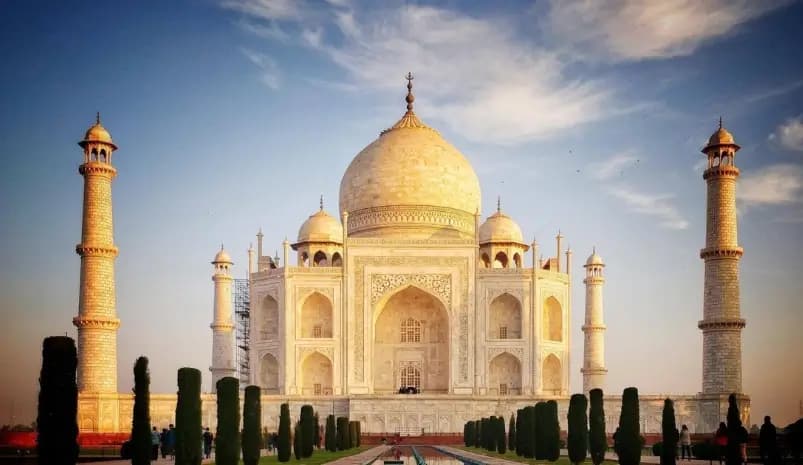
Helen, a 62-year-old retired teacher from Vancouver, had wanted to see the Taj Mahal for most of her adult life. What kept her from booking was not the cost or the flight. It was the fear of standing alone outside Delhi airport at midnight, negotiating with taxi drivers and guessing which guide at a monument gate was genuine. A friend who had travelled the same route the year before gave her one piece of advice: book it private, with your own driver and a licensed guide in every city, and let someone else handle the logistics.
That advice sums up why the private Golden Triangle tour with driver and guide has become the default choice for first-time visitors to India. You get a vehicle that belongs to your group alone, a driver who stays with you from the first airport pickup to the final drop, and a local expert waiting at each set of monuments. Nothing is shared with strangers, and the schedule bends around your energy levels rather than a group timetable.
Yet the phrase "private tour" covers a wide range of what actually gets delivered. This guide walks through the real inclusions, the route with honest drive times, the different jobs of the driver and the guide, and the booking steps that protect your money.
What a Private Golden Triangle Tour with Driver and Guide Actually Includes
A well-built private package has four core blocks: transport, guiding, accommodation and arrival support. Each block has details that separate a smooth trip from a stressful one, so it pays to read the inclusions line by line.
Transport means an air-conditioned vehicle assigned only to your group for the full duration, usually a sedan such as a Swift Dzire for one or two travellers with light luggage, a Toyota Innova Crysta or Hycross for two to five people, and a Tempo Traveller for larger families. The daily rate should already cover fuel, highway tolls, interstate permits between Delhi, Uttar Pradesh and Rajasthan, parking at monuments and hotels, and the driver's food and overnight allowance. If any of these appear as extras, the quote is incomplete. Bottled water in the car is standard, and many operators also keep wet wipes and a phone charger on board.
Guiding should name the language and confirm that the guide holds a government licence, either from the Ministry of Tourism or the state tourism department. On a classic six-day tour, you would normally have a full-day guide in Delhi covering Old and New Delhi, a guide in Agra for the Taj Mahal, Agra Fort and Fatehpur Sikri, and a full-day guide in Jaipur for Amber Fort, City Palace, Jantar Mantar and Hawa Mahal.
Accommodation should list named hotels with the room category and meal basis, typically breakfast only. "Or similar" leaves room for downgrades, so ask for confirmed names before paying a deposit.
Arrival support is the piece that would have calmed Helen's nerves. A good private Golden Triangle tour package includes a meet-and-greet at Delhi International Airport, where a representative stands outside the arrivals hall with a placard bearing your name, helps with a local SIM card if needed and escorts you to the car. International flights often land between 11 pm and 3 am, so the late-night pickup should be confirmed in writing.
What is usually not included matters just as much. Monument entry fees, which come to about ₹6,500 per person for foreigners across the route, are left out by some operators to keep the headline price low. Lunches and dinners, camera fees at a few Rajasthan sites, tips, and optional add-ons such as a sunrise hot air balloon ride or an evening cooking class are normally extra. A transparent quote lists every one of these so that nothing appears for the first time on the road.