Two couples from Singapore met over breakfast on the terrace of a Jaipur hotel and fell into a friendly argument. One pair was halfway through an Oberoi itinerary and swore nothing could match the hush and precision of Amarvilas. The other was travelling with Taj and insisted that sleeping inside a real maharaja's palace at Rambagh was the whole point of coming to Rajasthan. Both were right, and both had paid very different amounts for what looked like the same route.
The Golden Triangle tour with Oberoi vs Taj hotels is the most common question in luxury travel to North India, and it does not have a single answer. The two groups approach luxury from opposite directions. Oberoi builds new properties with obsessive attention to service and design. Taj, through its palace collection, restores historic royal residences and lets the history do much of the talking. Your choice depends on what you value most, and on how the prices line up city by city.
This guide compares the two brands property by property across Delhi, Agra and Jaipur, sets out realistic peak-season rates, and shows how a mixed package often gives the best of both.
Oberoi and Taj on the Golden Triangle: The Properties Side by Side
On a classic six-night luxury Golden Triangle tour, you will stay in three cities, and each brand has a flagship in each.
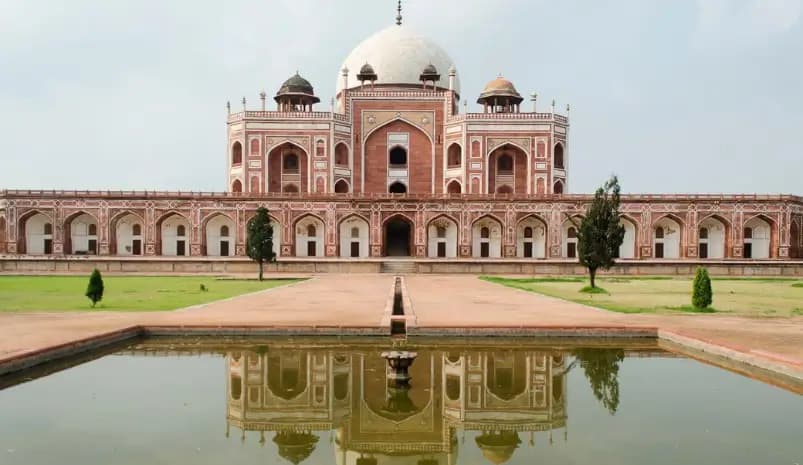
In Delhi, The Oberoi New Delhi reopened after a full renovation and now ranks among the most polished city hotels in Asia. Rooms overlook the Delhi Golf Club or the dome of Humayun's Tomb, the spa is excellent, and service runs with quiet precision. Expect around ₹38,000 to ₹55,000 per night for a deluxe room between October and March. On the Taj side, the Taj Mahal Hotel on Mansingh Road offers a more classic, old-world style with a loyal following among diplomats, at roughly ₹28,000 to ₹45,000. The Taj Palace in the diplomatic enclave is larger and more business-oriented, at ₹22,000 to ₹35,000.
In Agra, the difference between the brands is starkest. The Oberoi Amarvilas sits about 600 metres from the Taj Mahal, and every single room looks directly at the monument. Rates run around ₹75,000 to ₹130,000 per night. Taj does not have a palace hotel in Agra. Its property there, the Taj Hotel and Convention Centre, is a comfortable modern five-star with Taj views from upper floors and the rooftop, priced at about ₹14,000 to ₹22,000.
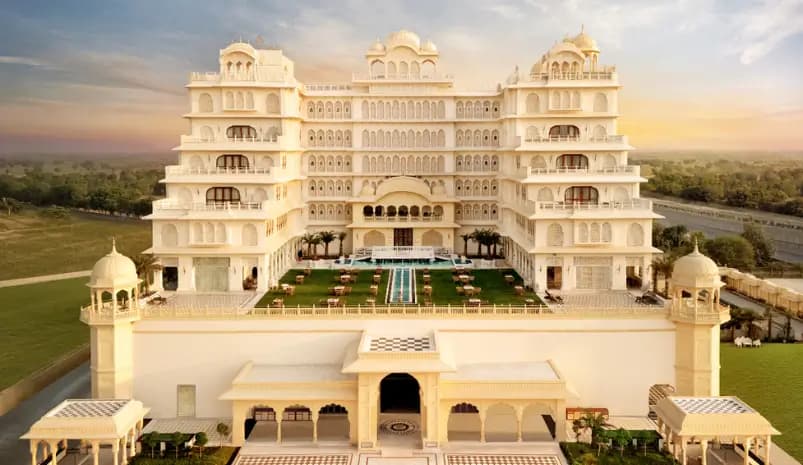
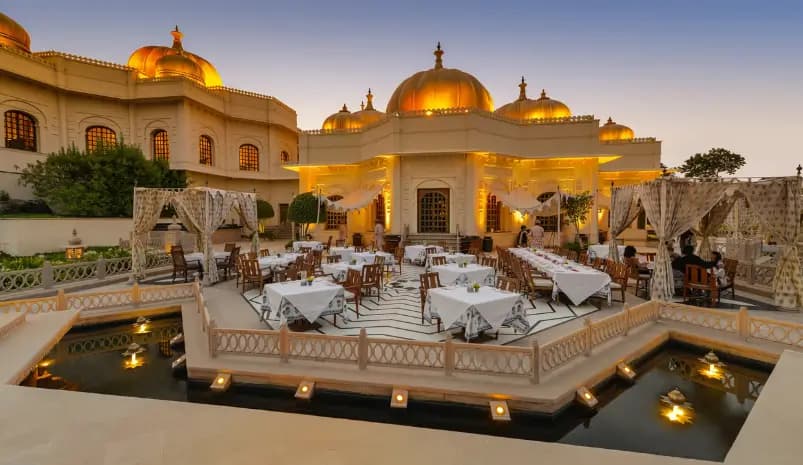
In Jaipur, the comparison turns the other way. Rambagh Palace, run by Taj, was the residence of the Maharaja of Jaipur until the middle of the last century. It sits on 47 acres of lawns with peacocks, and it has corridors lined with royal portraits and a bar themed around the family's polo history. Rooms start around ₹60,000 to ₹110,000 per night. Taj also runs Jai Mahal Palace, a smaller and more affordable 18th-century property at ₹28,000 to ₹45,000. The Oberoi Rajvilas, by contrast, was built only a few decades ago in the style of a Rajput fort, with 32 acres of gardens, luxury tents, private pool villas and a restored temple within the grounds. Its rooms cost around ₹60,000 to ₹100,000, and the pool villas often exceed ₹200,000.
The pattern is clear. Oberoi wins on consistency and design, especially in Agra, where nothing else comes close. Taj wins on authenticity in Jaipur, where Rambagh Palace offers something no newly built hotel can copy. Delhi is close to a draw and comes down to personal taste: a sleek, quiet contemporary hotel or a grand old institution with decades of history.
Service styles differ too. Oberoi staff tend to anticipate requests before you make them, with butler service in many categories. Taj teams bring warmer, more theatrical hospitality, such as welcome rituals, evening heritage walks and in-house storytellers at the palace properties. Neither is better in absolute terms, and many travellers find they prefer one brand simply because of how it makes them feel at check-in.